Loving the Unloveable

Love the Lord your God with all your heart and with all your soul and with all your mind and with all your strength.’ The second is this: ‘Love your neighbor as yourself.’ There is no commandment greater than these.” Mark 12:30-31

Anyone in your life unloveable? Anyone fit that description?

Family? Acquaintances? Coworkers?

Children come to mind.

At times they seem unloveable when demanding things their way.

When irritated, they can spew forth ugliness, wishing you’d disappear.

Fine. I’ll go.

But that’s not biblical. Not God’s way.

He wants you to stay, loving the unloveable.

Can you even imagine a harder assignment?

Not me. Goes against my every fiber.

We usually love others because we get things in return.

Love, acceptance, respect, you get the idea.

But loving the unloveable? Yikes, that’s a whole new arena.

Yet that’s what God calls us to do. Literally. We are called to love others, no matter the response.

Jesus is our example. He loved us without reserve.

Without compromise. Without question.

And He loves us still when we revert back to our sinful selves, choosing our flesh too many times to count.

In other words, when we, ourselves, are unloveable, God still loves us.

If you’re willing, partner with God. His power through us can begin our attempt to love those who distain us.

God’s love. Not yours.

At the end of the day, God will be glorified if you love even when others don’t deserve it.

Even if they roll their eyes, talk back, or wish upon your disappearance.

Ask God to fill you with Himself each day as you wear His identity for you.

Only then, will you fulfill His greatest commission: To love your neighbor as yourself.

May we witness God through our daily human reactions. And may God Himself be manifest through our human attempts at love as we place others before ourselves.


Photos by Saad ChaudhryMark BossElia Massignan, & Sixteen Miles Out on Unsplash

Clinging to the Old

Therefore if any man be in Christ, he is a new creature: old things are passed away; behold all things are becoming new. 2 Corinthians 5:17

Are you?

Clinging to the old?

The old meaning your self without God.

Your sinful self.

The self that feels better some of the time.

1 Corinthians 5:17 suggests, “If any man be in Christ, he is a new creature; old things are passed away.”

When we become a Christian, declaring our faith in God, we become new.

Our mind, body, soul, and spirit become new in the eyes of God.

Because with God covering us, we are without spot or blemish.

Old things pass away, meaning our sins are forgiven.

But my question is this: what old ways are you still holding onto?

What comfortable sinful actions do you insist on instead of how God wants you to act?

Just because the old has passed away doesn’t mean you can’t ask for it back.

Picture a closet.

You declare your faith in God.

God replaces all your clothes with new garments.

They are perfect.

Not always comfy, but made by God just for you.

You wake up, deciding what to wear.

Since you are still irked by yesterday, the shiny new clothes almost blind you.

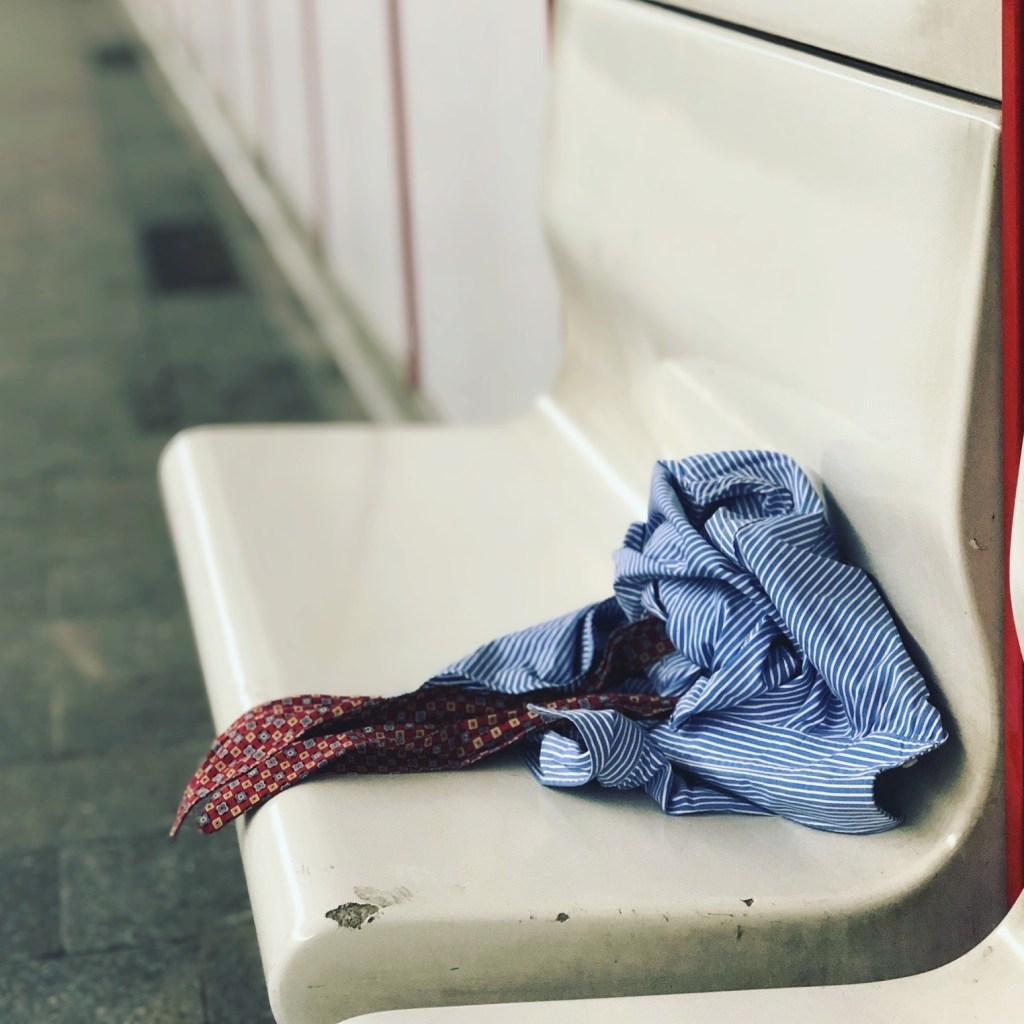
You instantly wish, audibly, for that ratty sweatshirt.

You blink, and see it crumpled back on your floor.

Do you wear it?

Up to you.

Your old sinful nature is wiped clean with Christ’s forgiveness.

But your old ways can and will still creep up, tempting you to wear them.

You must keep your faith in God, asking Him what to wear each day, each moment.

Should I wear faith or fear?

Anxiety or peace?

Self-pity or grace?

Fear, anxiety, and self-pity are a whole lot more comfy at times, yes?

But they make you ugly.

Ask the One who set you free to keep setting you free each and every day.

And each day you choose God and His ways, it will become easier and easier to reject your old ways.

And pretty soon, that ratty sweatshirt in the corner will disappear.

But only if you decide you want it no longer.

tommaso-pecchioli-H3t3peefG2Q-unsplash
christian-fregnan-f76zzdCEBgw-unsplash

Photos by Jozsef Hocza, Zui HoangMartino PietropoliPatryk SobczakTommaso Pecchioli, & Christian Fregnan on Unsplash